Blocky Quest: 3D Platformer
BibotaAdventure
4.15.00 Reviews
- Version
- 1.1.3
- Installs
- 1.00M
- Age Rating
- Everyone
Screenshots
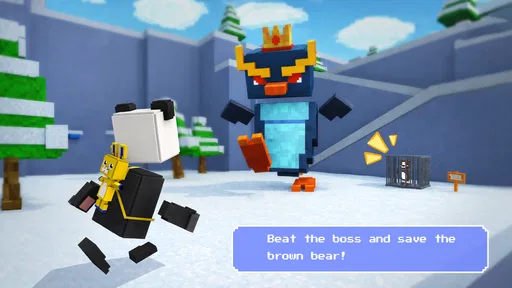
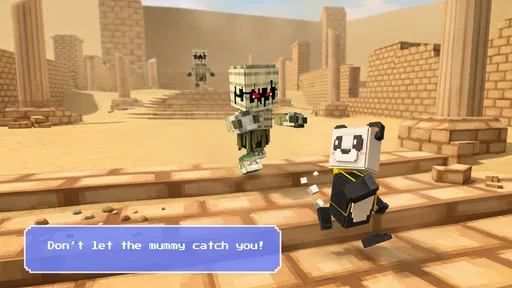
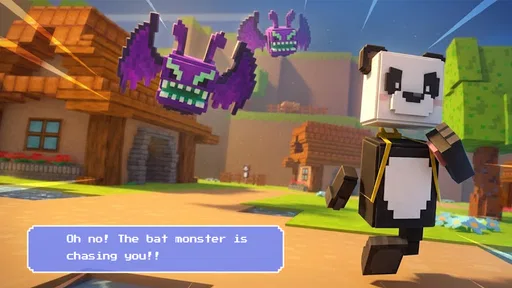
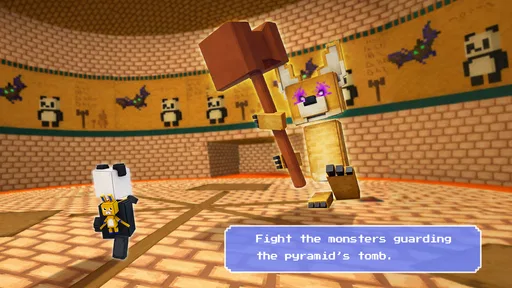
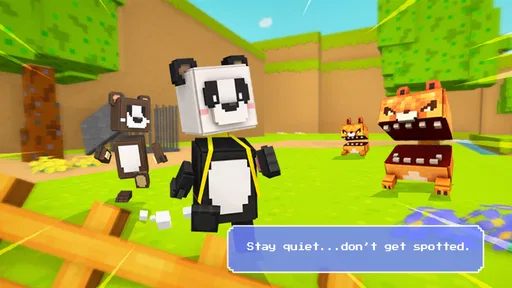
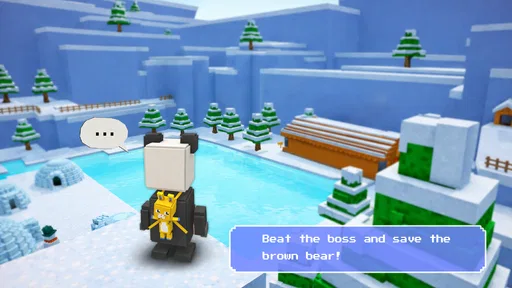
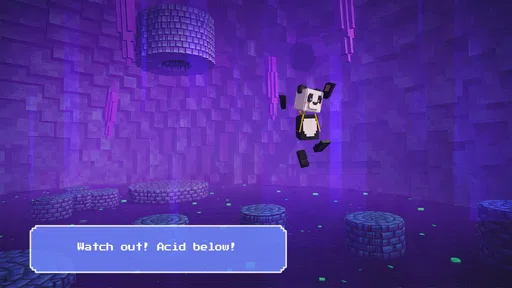
Our Review of Blocky Quest: 3D Platformer
 Analysis by Appyee
Blocky Quest: 3D Platformer is the kind of adventure game I can pick up for a short break and understand almost immediately. Its appeal is easy to see: a colorful block-built world, movement based around jumping and dashing, and combat that gives exploration a little more purpose than simply walking from one area to the next. I reviewed it as a game for Android, and my overall impression is that it aims for quick, approachable fun rather than a complicated role-playing experience.
That simplicity matters when thinking about who can enjoy it. The game is listed for Everyone, and the basic premise is easy to grasp even if you do not normally play adventure titles. At the same time, a voxel world and straightforward controls do not automatically make a game comfortable for every player. Camera movement, timing, visual density, and the need to react quickly can still create friction. My experience is that Blocky Quest works best when you want a light 3D platforming adventure, provided you are comfortable with touch controls and a fairly active screen.
How the block-built world communicates its action
The strongest part of the presentation is its visual language. A voxel environment naturally separates objects into chunky shapes, so the world feels less visually delicate than a realistic 3D game. That can help when you are trying to identify platforms, obstacles, or enemies at a glance. The blocky style also gives the game a friendly tone, which fits its Everyone age rating better than a darker or more intense adventure presentation would.
Still, readability in a platformer is not only about bright colors or large shapes. You need to understand where you can land, which direction the character is facing, and whether a gap is meant to be crossed with a normal jump or a dash. I found that the most useful habit is to slow down before unfamiliar sections instead of holding the movement direction continuously. A brief pause lets me read the next platform and reduces mistakes caused by rushing into a visually busy space.
The game’s short description presents it as “Blocky Quest,” while its fuller identity, Blocky Quest: 3D Platformer, tells you more about the experience. It is not trying to hide the central interaction: movement, jumping, dashing, and fighting. That clarity is helpful for people who want to know what they are downloading. You do not need to learn a dense set of menus or understand a complicated story premise before starting.
Navigation is also easier when I treat the environment as a sequence of small decisions rather than one large route. I look for the next safe surface, check the angle of the camera, and then commit to the jump. This approach is especially useful for players who find constant visual motion tiring. It turns the game into a rhythm of observe, move, and reassess instead of an uninterrupted stream of reactions.
One trade-off comes from the same block-based design that makes the game approachable. Similar-looking surfaces can make depth harder to judge, particularly when several platforms sit close together or when the camera angle changes. Players with reduced depth perception, visual processing difficulties, or sensitivity to busy scenes may need more time to orient themselves. The style is inviting, but it is not automatically high-contrast or low-stimulation.
Reading the action without rushing
I recommend beginning with deliberate movement rather than trying to move as quickly as possible. In a game built around jumping and dashing, speed feels tempting, but it can make the screen harder to parse. Use the edges of platforms as visual reference points, and avoid making a dash immediately after a camera turn. Waiting a moment can reveal whether the intended path is above, below, or across the current position.
This is a small but meaningful accessibility-minded technique because it reduces the amount of information you must process at once. It also helps new players learn the relationship between the camera and the character. Instead of treating a missed jump as a reflex problem, you can ask whether the issue was route reading, timing, or orientation. That makes practice more useful and less frustrating.
Movement, timing, and sensory comfort
Blocky Quest’s movement focus gives it an active feel. Jumping and dashing are not decorative actions; they shape how I approach the world. Combat adds another layer, asking me to manage movement while dealing with threats. For players who enjoy direct interaction, this combination is more engaging than a purely exploratory walking game.
The downside is that touch-based movement can be demanding when several actions need to happen close together. A player with limited dexterity, tremors, joint pain, or difficulty with rapid repeated gestures may find platforming and combat less comfortable than the game’s friendly art style suggests. The challenge is not necessarily understanding what to do. It is performing the action at the right time while maintaining control of the character and view.
My practical advice is to play in short sessions at first. That is not only because the game suits casual use; it also gives your hands and eyes a chance to adjust to the control pattern. If a particular section feels tiring, repeating it immediately can turn a small mistake into physical strain. Taking a break and returning with a clearer view is often more effective than forcing another attempt.
Sensory comfort deserves equal attention. A 3D platformer can involve camera motion, quick changes in position, and repeated visual transitions. Players who are prone to motion discomfort should test the game cautiously, keep the device at a comfortable viewing distance, and stop if the movement begins to feel unpleasant. I would not choose this as a first recommendation for someone specifically seeking a calm, static, low-motion game.
Sound can also affect the experience, even when the visual design is the main attraction. Some people play with audio enabled to make the action feel more responsive; others need quiet because sound effects become distracting. Blocky Quest is easy to understand as a visual game, so I can see it fitting a muted or low-volume setup better than an adventure that depends heavily on spoken dialogue. I would still treat audio as a personal comfort choice rather than assume it is unnecessary for everyone.
The game is free to download, which makes trying it relatively simple. It includes optional purchases ranging from $0.99 to $399.99 per item, so I would be careful if a child is using the device or if purchase controls are shared. The free entry point is useful for testing whether the movement and visual style work for you, but the presence of in-app purchases means “free” should not be confused with an entirely purchase-free experience.
Making a short session easier to manage
A realistic use case is a ten-minute break between tasks. I would play with the device held steadily, lower the surrounding distractions, and focus on one small stretch of exploration rather than trying to make major progress. This setup is better for players who tire quickly from concentration because it gives the session a clear stopping point. It also reduces the temptation to rush through a difficult sequence when attention is already divided.
For a child, I would introduce the game while staying nearby during the first session. The Everyone rating makes the general audience clear, but the movement demands and optional purchases are still worth explaining. Showing how to pause, how to stop playing when the screen feels uncomfortable, and how to avoid accidental purchases is more useful than assuming the bright art makes the game automatically suitable for every situation.
For an older player who enjoys exploration but is less comfortable with fast games, the best approach is to focus on the adventure atmosphere and learn the controls gradually. The blocky presentation is less intimidating than a realistic action game, yet the platforming still requires timing. That distinction is important: the game may be visually approachable without being physically effortless.
Where it fits beside other adventure games
Compared with a story-heavy adventure game, Blocky Quest puts more emphasis on immediate movement. You are drawn into the world through jumping, dashing, and fighting rather than long conversations or elaborate narrative systems. I prefer this when I want something I can understand quickly. If your ideal adventure is mainly about dialogue, puzzles, or a carefully directed story, this may feel too action-oriented.
Compared with a competitive action game, it appears more welcoming because the focus is on navigating a blocky world instead of competing against other players. That makes it a better fit for someone who wants personal progress and casual exploration. However, the absence of competitive pressure does not remove the need for coordination. Platforming mistakes and combat timing can still be frustrating, especially for players who need slower pacing or more forgiving input.
It also differs from a traditional open-world game in scale and commitment. The store summary describes a massive 3D voxel world, but I would not approach it expecting the same kind of deep simulation or long-form freedom associated with large console adventures. Its strength is the accessible idea of moving through a stylized environment and dealing with obstacles as they appear. That makes it easier to sample, but potentially less satisfying for players who want extensive character development or a highly detailed world.
The game comes from Bibota and has reached over one million installs, with a 4.2 average from around 701 ratings. Those figures suggest that the basic concept has found an audience, but they do not replace personal testing. The most important question is whether the control demands suit you. A popular, colorful platformer can still be the wrong choice if you need very slow movement, strong visual customization, or a minimal-motion presentation.
The current version is 1.1.1, and the listed minimum operating system is Android 7.1. That makes the compatibility range practical for many Android users, but device performance can still influence comfort in any 3D game. I would close other demanding apps, keep the device charged, and avoid playing in a position that makes the screen difficult to see. These are simple steps, yet they matter more when precision and visual orientation are central to the experience.
Who should choose it, and who should skip it
I would recommend Blocky Quest to players who like colorful adventure games, want a free starting point, and enjoy learning movement through experimentation. It is especially suitable for someone who prefers direct action over long explanations. The voxel style may also appeal to players who enjoy block-based worlds but want more active traversal than a building-focused game provides.
I would be more cautious recommending it to anyone looking for extensive accessibility controls, a slow puzzle adventure, or a game that can be played comfortably with almost no rapid input. I would also skip it if camera motion regularly causes discomfort, or if touch controls are difficult for you and there is no practical way to adapt your setup. The game’s welcoming appearance should not be mistaken for proof that every player will find the physical interaction easy.
Parents and caregivers should consider two separate questions: whether the adventure theme is appropriate, and whether the device environment is controlled. The Everyone rating addresses the broad age audience, while the in-app purchase range makes purchase protection sensible. I would also pay attention to how long the player can comfortably concentrate, since repeated jumps and fights may be more tiring than simply exploring a static world.
My inclusive verdict after playing
What I like most about Blocky Quest is its immediate invitation to play. The block-built world is friendly, the premise is easy to understand, and the combination of exploration, jumping, dashing, and combat gives each session a clear purpose. I can imagine recommending it to a friend who wants a casual 3D adventure without first studying a complicated rulebook.
Its limitations are just as important. Visual simplicity does not guarantee easy navigation, and an Everyone rating does not mean every ability or sensory need is covered. The game asks for attention, timing, and touch control. Players with motor limitations, motion sensitivity, or difficulty reading busy 3D spaces may need to approach it carefully, play in shorter sessions, or choose a different kind of adventure altogether.
My most useful recommendation is to treat the free version as a practical comfort test. Try a quiet session, move slowly through the first areas, and notice whether the camera, platform spacing, and action timing feel manageable. If they do, Blocky Quest: 3D Platformer is a cheerful, approachable adventure for short bursts of exploration and action. If they do not, its attractive voxel style will not compensate for controls that leave you tired or disoriented.
In the end, I see it as a good choice for players who value quick understanding and active play, with enough visual personality to stand apart from a plain platformer. I would recommend it with realistic expectations: enjoy the blocky world, use deliberate movement, supervise purchases where necessary, and do not assume that a simple presentation removes every barrier. For the right player and the right setting, it is an enjoyable free adventure from Bibota; for someone needing highly adaptable controls or a very calm experience, another game would be the better fit.
Privacy and Permissions
See what permissions an app requests and how it handles your data.
- Wi-Fi connection information
- view Wi-Fi connections
- Other
- view network connections, full network access, control vibration, prevent device from sleeping, Google Play license check
Verdict
Strengths of Blocky Quest: 3D Platformer
- Bright block-based visuals are easy to read on smaller phone screens.
- Short levels make it convenient for quick gaming sessions.
- Simple controls are approachable for younger and casual players.
- Collectibles add extra goals beyond simply reaching the finish.
- Offline play is useful when traveling or away from Wi-Fi.
Limitations of Blocky Quest: 3D Platformer
- Some levels may feel repetitive after the initial hours.
- Precision jumps can be frustrating on touch controls.
- The camera may occasionally obscure platforms or hazards.
- Later stages can rely heavily on trial and error.
- Progression may feel limited for experienced platformer fans.
Similar Picks in This Category
View All
Roblox
Roblox Corporation4.2

Pokémon GO
Niantic, Inc.3.5

Ninja warrior: legend of adven
TOH Games4.6

Ninja Arashi
Black Panther4.6

Eyes - The Horror Game
Fearless Games sp. j.4.5

Critical Action:Gun Strike Ops
FPS Shooter & Action Game4.3
Frequently Asked Questions
What is Blocky Quest: 3D Platformer?
Blocky Quest: 3D Platformer is a colorful adventure game built around classic platforming mechanics. You guide a block-shaped character through three-dimensional levels filled with platforms, gaps, obstacles, collectibles, and enemies. The game focuses on movement, timing, exploration, and reaching the end of each stage, making it suitable for players who enjoy casual action games with a simple visual style.
How do you play Blocky Quest: 3D Platformer?
Gameplay is based on controlling your character through floating platforms and obstacle-filled environments. You generally move, jump, avoid hazards, collect useful items, and search for the safest route to the finish. The controls are designed to be approachable, but later sections may require more accurate jumps and better timing. Learning each level’s layout is important, especially when platforms are narrow or moving.
Is Blocky Quest: 3D Platformer suitable for children?
The game’s blocky graphics and straightforward platforming make it accessible to younger players, while its challenges can also appeal to adults who enjoy casual games. It does not appear to rely on complex storytelling or advanced controls. Parents should still review the game’s store listing for advertising, in-app purchases, age classification, and privacy details before allowing a child to download and play.
Does Blocky Quest: 3D Platformer require an internet connection?
Whether an internet connection is required can depend on the version installed and the features included by the developer. Basic platforming may be available offline, but advertisements, updates, analytics, cloud features, or other connected services may require access to the internet. It is best to test the game once after installation and check its permissions and store description before playing without a connection.
Is Blocky Quest: 3D Platformer free to download?
Blocky Quest: 3D Platformer may be offered as a free download, although availability, advertising, and optional purchases can vary between Android and iOS versions. Before installing, check the official store page for the current price and purchase information. Also review whether the game includes rewarded ads, paid items, or other optional transactions, particularly if the device is shared with children.
Play our best games!


